


Makaleler
9
Tümü (9)
SCI-E, SSCI, AHCI (7)
SCI-E, SSCI, AHCI, ESCI (7)
Scopus (7)
TRDizin (2)


7. Diversity in a signal-to-image transformation approach for EEG-based motor imagery task classification
MEDICAL & BIOLOGICAL ENGINEERING & COMPUTING
, cilt.58, sa.2, ss.443-459, 2020 (SCI-Expanded, Scopus)


Hakemli Bilimsel Toplantılarda Yayımlanmış Bildiriler
15
Diğer Yayınlar
1
AVESİS Veri
1
MI-BMPI: Motor Imagery Brain--Mobil Phone Interface Dataset
MI-BMPI: Motor Imagery Brain--Mobil Phone Interface
DatasetThis dataset contains two significant mobile gestures for
brain-mobile phone interfaces (BMPIs: (i) motor imagery of tapping on the
screen of a mobile device and (ii) motor imagery of swiping down with a thumb
on the screen of a mobile device. The raw EEG signals were recorded using the
Emotiv EPOC Flex (Model 1.0) headset with saline-based sensors and Emotiv Pro
(2.5.1.227) software. The sampling rate is 128 Hz. Each epoch contains 3.5 s
signals. The first 1 s signal is recorded before the MI task starts (5 s to 6 s
interval in the timing plan), and the next 2.5 s signal is recorded during the
MI execution (6 s to 8.5 s interval in the timing plan). Please refer to the
reference study below for details.
The file names are constructed as follows. For example,
taking "D01_s1" and "D01" in the file name refers to
subject "01", and "s1" refers to session 1 ("s2"
refers to session 2). The label data is given in a separate folder in Matlab
format.
The data is provided in two different forms for use (the
desired is preferable):
The set_files folder contains the data prepared for import
in EEGLAB. EEGLAB must be installed, and the set files must be imported to
access the data. The data is in epoched format in 3D (channels, sample_points,
trials). With the EEGLAB interface, all the data can be accessed, and EEGLAB
functions can be executed. Also, the EEG variable, which is built after
importing the *.set file, contains all the information about the experiment.
With the EEG.data variable, epoched data in the dimensions (channels, sample_points,
trials) can be accessed.
The mat_files folder contains data in mat file format. In
these files, epoched data is stored in a 3-D array of size (channels,
sample_points, trials). You can access the data as follows. For example, all
data from the first session of subject D01 can be retrieved as follows. Load
the mat file with the load('D01_s1.mat') code, and access the data using the
EEG variable in the workspace. For instance, 13x448 x101 sized epoched data
(channels, sample_points, trials) can be retrieved with the command EEG.data.
Other information about the experiments and subjects is also included in the
fields of the EEG variable.
This research was supported by the Turkish Scientific and
Research Council (TUBITAK) under project number 119E397.
The following article can be used in academic studies with
reference. Permission must be obtained for use in commercial studies.
References Paper: Yilmaz, C.M., Yilmaz, B.H. & Kose, C.
MI-BMPI motor imagery brain–mobile phone dataset and performance evaluation of
voting ensembles utilizing QPDM. Neural Comput & Applic 37,
4679–4696 (2025). https://doi.org/10.1007/s00521-024-10917-5
This dataset is licensed under the Creative Commons
Attribution-NonCommercial 4.0 International (CC BY-NC 4.0) license.
Can be downloaded from:
https://zenodo.org/records/13626922
orhttps://figshare.com/articles/dataset/MI-BMPI_Motor_Imagery_Brain--Mobil_Phone_Interface_Dataset/26893396
:
3

Metrikler
Yayın
25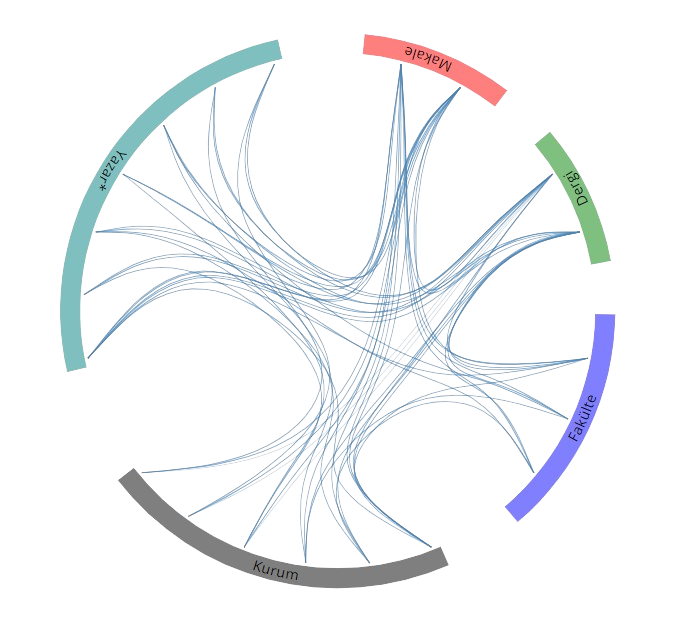
Açık Erişim
6
BM Sürdürülebilir Kalkınma Amaçları